Table of contents
Sanctions are designed to pressure governments, yet they are lived, day after day, by households, shopkeepers, nurses, students and small employers. From Iran to Syria, from Venezuela to Russia, the pattern is familiar: money moves less freely, imports thin out, and the cost of basic stability rises. What changes first is rarely the headline economy; it is the mundane choreography of life, where paying a bill, finding a medicine, or keeping a business open becomes a longer, more uncertain calculation.
“Paying” becomes a monthly negotiation
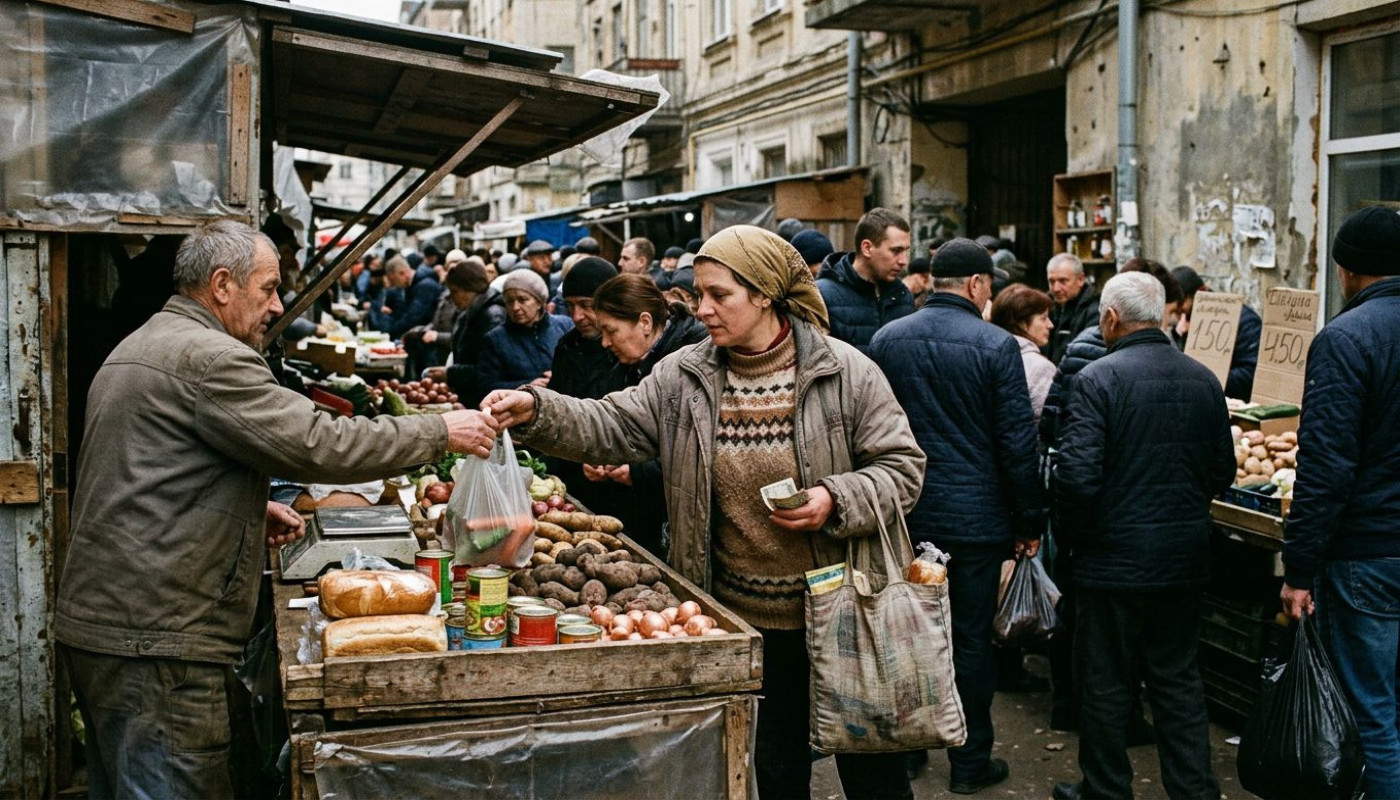
What does it mean to be solvent when the rails of payment keep shifting? In sanctioned economies, the first friction often appears in the ordinary places where trust is usually invisible: bank transfers that no longer clear, cards that stop working abroad, marketplaces that lose access to mainstream payment processors and cloud services, and companies that suddenly need a third party, and then a fourth, to move funds. Even when sanctions target specific entities, banks and suppliers frequently “de-risk” broadly, tightening compliance to avoid penalties, and ordinary customers feel the squeeze as waiting times lengthen and fees multiply.
The mechanics differ by country, yet the lived experience rhymes. In Iran, for example, years of restrictions on financial messaging and correspondent banking have forced firms into complex workarounds, while households have grown used to friends and relatives acting as informal payment bridges. In Venezuela, where U.S. oil and financial sanctions intensified from 2017 onward, daily commerce increasingly migrated into dollars and other foreign currencies, a shift documented by academic surveys and by the country’s own central bank data on inflation dynamics. In Russia, after the 2022 invasion of Ukraine, the combination of asset freezes, export controls and the removal of several major banks from SWIFT reshaped cross-border payments, and, inside the country, accelerated the adoption of domestic alternatives and “parallel” arrangements with non-Western partners.
For workers paid in local currency, the problem is not only access, it is predictability. A salary that arrives on time can still lose value quickly if inflation accelerates, and the price tags, in turn, become moving targets. The humanitarian picture is uneven, because sanctions regimes often include exemptions for food and medicine, yet exemptions do not automatically translate into delivered goods. Compliance departments still need to be convinced, insurers still need to underwrite shipments, freight operators still need to accept the route, and each added layer costs time and money. The result is a kind of low-grade financial stress that sits behind everything else: parents postpone repairs, freelancers get paid late, small firms limit hiring, and a routine transaction becomes a chain of phone calls.
That pressure also changes behavior in ways policymakers rarely foreground. Cash holdings rise because people distrust rails they cannot control, and informal finance grows because it fills gaps quickly, even if it is riskier and more expensive. When official routes narrow, the premium on “knowing someone” widens, and that is where inequality sneaks in: those with connections, foreign passports, or relatives abroad gain options that others do not have.
Pharmacies, spare parts, and the new scavenger hunt
Ask anyone living under wide-ranging restrictions what disappears first, and the answer is often mundane, not dramatic: insulin brands, baby formula, specific antibiotics, a car part that turns a vehicle into scrap, a laboratory reagent that keeps a diagnosis on hold. Sanctions may not formally ban humanitarian goods, but they can throttle the logistics that move them, and export controls can also restrict dual-use items that have legitimate civilian purposes. In practice, the supply chain becomes a scavenger hunt, and that hunt has a price.
Iran’s health sector has repeatedly flagged difficulties importing specialised medicines and medical devices, especially when payment channels tighten or when suppliers fear secondary sanctions. Syria offers a stark illustration of compounding effects: sanctions interact with conflict damage, currency collapse and infrastructure loss, and the World Health Organization has documented repeated stresses on access to medicines and functioning health services. In Russia, shortages of some pharmaceuticals and medical equipment have been reported as companies adjust supply routes, substitute products, or exit; in response, authorities have expanded mechanisms for parallel imports and domestic substitution, with mixed results over time.
Outside healthcare, the sanctions-era economy teaches people to maintain, repair and extend the life of everything. Mechanics become detectives; electricians learn to improvise; small factories strip old machines for parts. That resourcefulness can be admirable, yet it also reveals a hidden cost: productivity drops when a modern economy is forced to operate like a perpetual repair shop. Vehicles stay off the road longer, workshops hold less inventory, and firms that might have expanded instead spend their capital on simply staying functional. Students in technical fields feel it too, because laboratories rely on imported instruments, software licenses and components, and interruptions can derail a semester’s worth of work.
The gray market grows precisely because it works. Goods arrive through third countries, labels change, invoices reroute, and customers pay the premium of uncertainty. For consumers, that often means trading choice for availability, and safety for speed. A medicine sourced through unofficial channels may be real, yet it may also be counterfeit or improperly stored, and when regulators are overstretched, enforcement becomes patchy. Meanwhile, high import costs are passed down the chain, making everyday resilience a paid privilege.
Sanctions can also alter what is considered “basic.” A smartphone battery, a router, a software update, a simple subscription for remote work, these are not luxuries in many cities, yet restrictions on technology exports, app-store services, and platform access can turn them into obstacles. When digital tools fracture, the cost is social as well as economic: families lose easy communication, small businesses lose customers, and the professional class finds itself locked out of global networks that used to be taken for granted.
Work, study, travel: the shrinking horizon
How far can you plan when the horizon keeps moving? Under sanctions, long-term decisions become harder to justify, because the rules can change fast, and the penalties for mistakes can be severe. Employers hesitate before signing contracts with foreign partners, universities struggle to maintain collaborations, and students face obstacles that are both bureaucratic and quietly personal: a visa denied, a bank card that cannot pay an application fee, a scholarship that becomes impossible to transfer.
For younger people, the sanctions experience often looks like a narrowing funnel. International conferences, exchange programs and joint degrees may still exist on paper, yet the practical barriers multiply. Even when academic cooperation is allowed, payment routes for tuition, accommodation and insurance can break, and travel logistics can become a maze. After 2022, Russian citizens encountered sharp reductions in flight connections to Europe and North America, while visa processing tightened in several jurisdictions; for many, a trip that was once a weekend flight became a multi-stop route through third countries, at higher cost and with more uncertainty. In other sanctioned contexts, from Iran to Venezuela, similar stories circulate: students accepted abroad who cannot move funds, researchers who lose access to journals or tools, families separated by the friction of borders and compliance checks.
Work adapts, but not always upward. When formal firms cannot import inputs or access markets, employment can drift into informality, and in some cases into activities that sit closer to smuggling than to standard trade. That shift changes the texture of cities. Warehouses thrive, while factories shrink; middlemen multiply, while engineers look elsewhere. Remittances become a lifeline, yet they can be disrupted by restrictions on money transfer services, pushing flows into less transparent channels with higher fees. The World Bank has long documented how remittances can stabilise household consumption in crisis settings, and sanctions-heavy environments often amplify that dependence.
Travel, too, becomes a status symbol. Those with dual citizenship, foreign residency, or the ability to pay third-country routing costs can still move, and mobility turns into a marker of class. That social sorting is hard to capture in macroeconomic charts, yet it shapes morale and political attitudes. When people feel their world is shrinking, they often respond with a mix of resignation and ingenuity, and sometimes with a sharp turn inward, focusing on what can be controlled: family, local community, small ventures that rely less on imported inputs.
Even culture is affected. Artists and filmmakers can lose platforms and funding channels, sports teams can be excluded, and touring becomes expensive. The public debate in sanctioning countries often frames these outcomes as collateral or as necessary pressure, while those living under the measures experience them as cumulative constraints on the future.
Resilience, shortcuts, and the moral gray zone
Sanctions do not just restrict, they also reorganise. In the spaces where official systems retreat, alternative networks expand: barter arrangements, cash-based trade, crypto experiments, parallel imports, and the rise of intermediaries who specialise in getting “impossible” things done. Some of that is benign adaptation, some is corruption, and much of it sits in between, in a moral gray zone where survival and rule-breaking blur.
One recurring dynamic is the growth of middlemen. When a direct import is blocked or too risky, a trader in a third country offers a route, charging for expertise and risk. When a bank refuses a transfer, a broker offers a workaround. These services can keep households supplied and small firms afloat, yet they can also concentrate power in the hands of those who control access. Economists studying sanctions have repeatedly noted that broad restrictions can create rents for connected actors, and that the burden often falls more heavily on smaller businesses and ordinary consumers than on elites with established networks.
Another dynamic is substitution. Domestic producers step in, sometimes successfully, sometimes with quality gaps, and governments promote local alternatives to foreign brands. Over time, this can create pockets of capability, yet it can also lock in inefficiencies if competition is limited and inputs remain constrained. Russia’s post-2014 import-substitution push, which intensified again after 2022, illustrates both sides: certain agricultural and industrial segments expanded, while other sectors struggled with access to advanced components and machinery under export controls. In Iran, domestic production has grown in some pharmaceutical lines, yet specialised inputs and devices often still depend on external supply chains.
For families, resilience is less ideological and more practical. People stockpile when they can, they learn which shops have reliable supply, they swap tips on messaging apps, and they develop budgeting habits that would look extreme in stable economies. Birthdays become smaller, repairs are delayed, and “nice to have” quietly becomes “not worth the risk.” At the same time, communities can become tighter, because mutual aid fills gaps that institutions cannot. It is a form of social adaptation that rarely shows up in sanction impact assessments, yet it is one of the most consistent stories from the ground.
For outsiders trying to engage ethically, the question becomes: how do you support civilians without feeding the very gray networks that sanctions can nourish? That is where independent information, education, and transparent pathways matter. Readers looking for structured background and programs that engage with complex international environments can consult the Intercollegium website, which provides an entry point into broader discussions on cross-border realities and how individuals navigate them.
Planning under pressure: practical steps
If you are travelling, studying, or supporting relatives in a sanctioned country, budget extra for transaction fees and routing costs, and verify payment options before committing to flights, tuition, or medical purchases. Book early when you can, keep documentation organised for compliance checks, and look for aid pathways, including humanitarian exemptions and NGO support, when health or essential needs are involved.
Similar articles

Rethinking Service Delivery: When Compliance Shapes Client Expectations
Inside The Boardroom: What Directors Really Fear About Litigation
How Fast Can You Obtain A Legal Entity Identifier?

Modern Nomad Lifestyle: Freedom or Folly?
